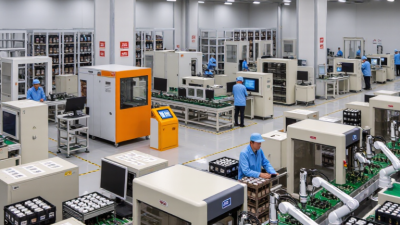
Choosing a reliable partner for pcb and assembly work can shape a product’s cost, performance, and launch schedule. This guide examines top PCB and assembly manufacturers worldwide through practical industry criteria. These include design support, material control, component sourcing, assembly accuracy, testing, and production capacity.
Quality is visible in small details. A clean solder joint matters. So does traceability. Experienced manufacturers often provide DFM reviews, automated optical inspection, X-ray inspection, and functional testing. Their facilities may support prototypes, low-volume builds, and high-volume production without losing process discipline. Certifications such as ISO 9001, ISO 13485, or IATF 16949 can indicate structured quality systems, depending on the application. They do not guarantee perfect results.
That distinction matters.
This overview compares manufacturers by capabilities rather than marketing claims. It considers communication, engineering responsiveness, delivery consistency, and supply-chain resilience. Factory automation is useful, but skilled technicians still solve unusual defects and assembly problems. A lower quotation may hide tooling fees, testing limits, or longer approval cycles. We should admit one limitation: public company information can become outdated, and reported capabilities may vary by facility.
Readers should verify certifications, audit production sites when possible, and request recent customer references. Clear drawings, approved component lists, and realistic forecasts also improve outcomes. The strongest supplier is not always the largest. It is the partner that understands technical requirements, documents decisions, and responds honestly when something goes wrong.
Defining PCB and Assembly Manufacturing
Printed circuit board manufacturing creates the physical platform for electronic signals. It begins with laminate selection, copper imaging, etching, drilling, plating, and electrical testing. A finished board may contain microscopic tracks, multilayer connections, and tightly controlled impedance. Grand View Research estimated the global PCB market at approximately USD 89.7 billion in 2023, with continued growth expected through 2030. The figure reflects rising demand for computing, vehicles, medical equipment, and industrial controls.
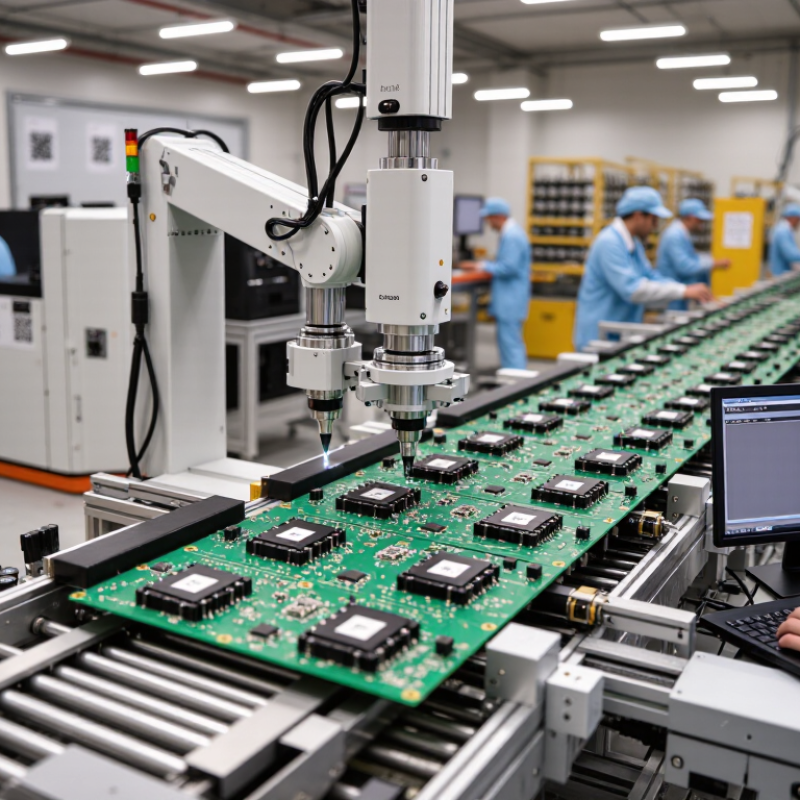
Assembly manufacturing adds components to that board and turns it into a working electronic unit. Operators or automated lines place resistors, processors, sensors, and connectors. Solder paste printing, surface-mount placement, reflow heating, and optical inspection are common stages. IPC quality guidance emphasizes process control, traceability, and defect prevention rather than final inspection alone. Small errors matter. A misplaced component can stop an entire product.
Reliable manufacturers also connect engineering decisions with production evidence. They review design-for-manufacturing rules, component availability, thermal behavior, and test coverage before volume production. The International Data Corporation has reported continuing growth in connected devices, increasing pressure on suppliers to deliver smaller and more dependable assemblies. Still, speed is not the whole measure of competence. Some production assumptions fail under heat, vibration, or supply disruption. That uncomfortable gap deserves testing, not optimistic paperwork.

China remains the largest PCB manufacturing base, while Taiwan, Japan, South Korea, North America, Europe, and other regions contribute to a globally distributed supply chain. The figures represent estimated shares of worldwide PCB production value for 2022, based on publicly reported industry market analyses.
Top PCB and Assembly Manufacturers Worldwide
Leading global manufacturers compete through capabilities, not factory size alone. WSTS reported global semiconductor sales of 627.6 billion US dollars in 2024, a 19.1% annual increase. That growth raises pressure on PCB and assembly suppliers to scale without weakening process control.
Traceability matters.
Strong manufacturers combine HDI fabrication, rigid-flex production, fine-pitch assembly, and advanced inspection. Automated optical inspection, X-ray inspection, and 3D solder-paste measurement help detect defects before shipment. IPC technology roadmaps emphasize tighter geometries, higher layer counts, and improved materials for high-speed signal integrity. These requirements demand controlled impedance testing, thermal analysis, and documented engineering changes.
Quality is measurable.
Reliable suppliers maintain certifications such as ISO 9001, ISO 13485, or IATF 16949 when their markets require them. They also track first-pass yield, defect rates, delivery performance, and corrective-action closure. However, certifications do not guarantee practical excellence. A clean audit can still miss unstable drilling, poor moisture control, or rushed operator training. Manufacturing experience remains visible in sample reviews, failure analysis, and pilot-run discipline.
The strongest partners provide digital production records, secure component verification, and regional logistics support. They can move from prototype batches to repeatable volume production. Yet flexibility has limits. Excessive customization may increase lead times and hidden costs. Buyers should compare measured capability, not impressive equipment lists.
| Manufacturer Category | Primary Production Focus | Typical PCB Technologies | Typical Layer Capability | Assembly Capability | Common Quality Certifications | Typical End Markets |
|---|---|---|---|---|---|---|
| High-Volume PCB Fabricators | Large-scale rigid and multilayer board production | FR-4, lead-free HASL, ENIG, immersion silver, OSP, impedance-controlled designs | 2–30+ layers, depending on design and volume | Automated SMT, through-hole, selective soldering, AOI and X-ray inspection | ISO 9001, ISO 14001, IPC standards; automotive sites may hold IATF 16949 | Consumer electronics, computing, industrial equipment and automotive electronics |
| Advanced HDI Specialists | High-density interconnect and compact form-factor boards | Microvias, sequential buildup, via-in-pad, fine-line routing and high-density flex-rigid structures | 4–20+ layers, with multiple sequential buildup cycles | Fine-pitch SMT, component placement below 0.4 mm pitch on suitable designs, automated optical inspection | ISO 9001, IPC-6012, IPC-A-600 and product-specific customer qualification requirements | Mobile devices, networking hardware, wearables and high-performance computing |
| Flexible and Rigid-Flex Manufacturers | Flexible circuits, rigid-flex assemblies and dynamic-bend applications | Polyimide flex, adhesiveless flex, rigid-flex, coverlay and stiffener integration | Single- and double-sided flex through multilayer rigid-flex constructions | SMT, hot-bar bonding, crimping, cable integration and controlled flex handling | ISO 9001, IPC-6013 and IPC-A-620 where cable and wire assemblies are included | Automotive, medical devices, aerospace systems and miniature electronics |
| High-Reliability Aerospace and Defense Suppliers | Mission-critical PCB fabrication and electronics assembly | High-reliability multilayer, RF/microwave, metal-backed and controlled-impedance boards | 2–30+ layers, subject to qualification, material and reliability requirements | SMT, through-hole, conformal coating, wire bonding, X-ray and documented process control | AS9100, ISO 9001, IPC Class 3 and applicable customer or regulatory approvals | Avionics, satellites, radar, secure communications and defense electronics |
| Automotive Electronics Manufacturers | Traceable PCB production and electronics assembly for vehicle systems | Multilayer FR-4, heavy-copper, metal-core, high-temperature and high-voltage designs | 2–20+ layers, depending on power, thermal and reliability needs | Automated SMT, selective soldering, press-fit, laser marking, functional testing and traceability | IATF 16949, ISO 9001, ISO 14001 and customer-specific automotive quality requirements | ADAS, infotainment, body control, powertrain and electric-vehicle systems |
| Medical Electronics Specialists | Controlled manufacturing for diagnostic, monitoring and therapeutic equipment | Rigid, flex and rigid-flex boards with fine-pitch, low-noise and high-reliability designs | 2–16+ layers, based on device complexity and regulatory requirements | SMT, microelectronics assembly, cleaning, coating, calibration and documented testing | ISO 13485, ISO 9001, IPC standards and customer or regulatory quality controls | Patient monitoring, imaging, laboratory equipment and portable medical devices |
| Quick-Turn and Prototype Providers | Prototype, engineering validation and low-volume production | Standard rigid, multilayer, flex and selected HDI technologies | 2–12 layers are common; higher counts may be available by quotation | SMT, through-hole, stencil production, rework and prototype functional testing | ISO 9001 and IPC workmanship standards are commonly used | Start-ups, research laboratories, industrial design and product development teams |
| Power Electronics Manufacturers | Thermally demanding boards and high-current electronics assemblies | Heavy-copper, insulated metal substrate, ceramic substrate and high-voltage PCB designs | 1–12+ layers, with copper weight and thermal design prioritized | SMT, power-component placement, through-hole, selective soldering and thermal inspection | ISO 9001, IPC-6012 and applicable automotive, industrial or safety certifications | Renewable energy, industrial drives, battery systems, chargers and power supplies |
Note: The figures and capabilities shown are representative industry ranges for leading global manufacturing categories rather than company-specific specifications. Actual limits depend on materials, design rules, qualification requirements, production volume and factory location.
PCB manufacturing remains concentrated in Asia-Pacific. Prismark’s 2024 PCB Industry Report estimates that the region produced roughly 90% of global PCB value in 2023. China serves high-volume consumer electronics and automotive programs. Taiwan specializes in advanced substrates and high-density interconnect boards. South Korea remains strong in memory-related packaging and display electronics. Japan focuses on precision materials, rigid-flex boards, and demanding industrial applications.
Other regions serve different requirements. North America emphasizes aerospace, defense, medical, and high-reliability assemblies. IPC’s 2024 electronics industry data shows continued investment in domestic capacity and supply-chain resilience. European manufacturers often support automotive, industrial automation, and energy systems, where traceability matters as much as price. Small details matter. A cleanroom, controlled humidity, and automated optical inspection can protect yield on a dense board.
Assembly capability also follows regional demand. Southeast Asian sites increasingly handle consumer, computing, and automotive programs, combining lower labor costs with expanding engineering teams. The SEMI World Fab Forecast reported continued semiconductor capacity expansion across Asia, indirectly supporting nearby substrate and assembly ecosystems. However, capacity figures can hide weaknesses. A factory may advertise advanced equipment but lack stable materials, skilled repair technicians, or tested second-source suppliers. Buyers should audit defect rates, change-control records, thermal cycling results, and delivery history. Regional specialization helps, but it never replaces direct factory evidence.
Choosing top PCB and assembly manufacturers worldwide requires more than comparing unit prices. Quality begins with controlled processes, trained engineers, and measurable inspection results. The ISO Survey 2023 records more than one million ISO 9001 certificates worldwide, showing how widely formal quality systems are adopted. Yet certification alone is not proof of daily discipline. Buyers should review first-pass yield, defect-per-million data, corrective-action speed, and traceability from bare board to packed assembly.
Compliance must reach the production floor. Strong manufacturers maintain documented material declarations, restricted-substance controls, calibration records, and change notifications. IPC industry standards are widely used for acceptance criteria, soldering practice, and assembly workmanship. Buyers should request recent audit findings, not only certificates. Small details matter. A labelled reel, a locked recipe, and a readable inspection image can prevent expensive field failures.
Supply chain resilience deserves equal weight. The World Bank Logistics Performance Index 2023 evaluated 139 economies and highlighted differences in customs, infrastructure, shipment reliability, and timeliness. A capable supplier therefore maps approved sources, keeps realistic safety stock, and tests alternative components before shortages occur. Dual sourcing sounds reassuring, but it can fail when both sources depend on the same upstream material. No scorecard is perfect. Factory visits, sample builds, and honest discussion of past mistakes reveal more than polished presentations.
Choosing a PCB manufacturing partner requires more than comparing quoted prices.
Prismark’s 2024 PCB Industry Forecast estimated that global PCB revenue fell about 15% in 2023. That decline makes capacity planning and financial stability important evaluation points.
Request recent audit records, process-control charts, and customer references. Check whether the factory measures drill accuracy, copper thickness, solder-mask registration, and impedance regularly. IPC standards provide useful technical benchmarks, but certification alone proves little. A capable supplier should explain how it handles deviations, corrective actions, and engineering changes.
Ask for traceability at the lot level. You should be able to connect a finished board to laminate batches, operator records, inspection images, and test results.
Review the factory floor, not only the presentation room. Observe storage humidity, material labeling, and cleanliness around imaging equipment. Small details often expose weak discipline.
IPC’s 2024 electronics industry research continued to identify supply-chain disruption and skilled-labor shortages as significant manufacturing concerns. Therefore, ask for backup plans, cross-trained operators, and realistic lead-time data.
A promised five-day build may ignore testing or transport. That mistake is common.
I once valued equipment lists too highly. Process ownership mattered more. A smaller plant with disciplined documentation may outperform a larger facility with vague accountability. The best partner welcomes difficult questions, shares measurable evidence, and admits where its process still needs improvement.